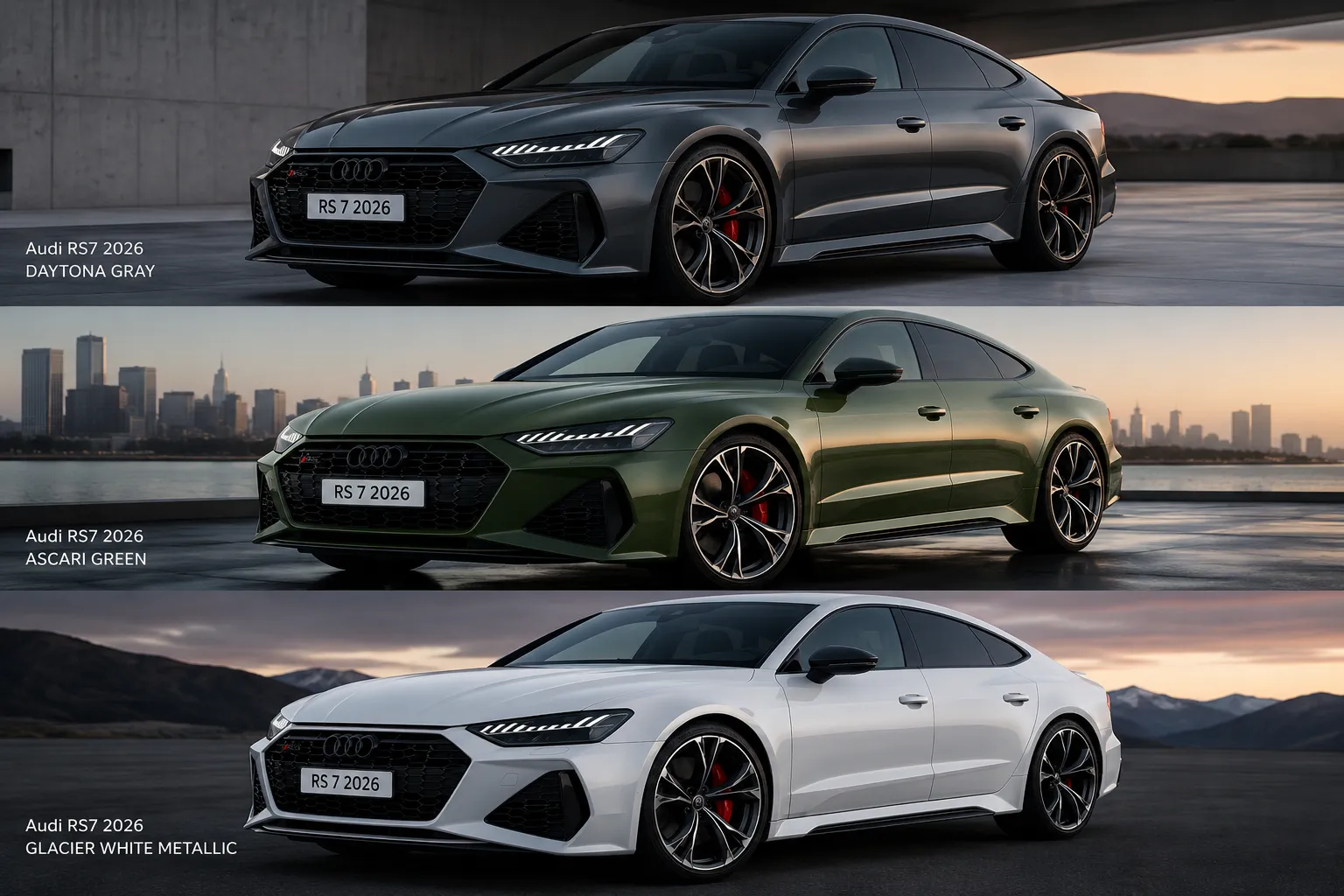
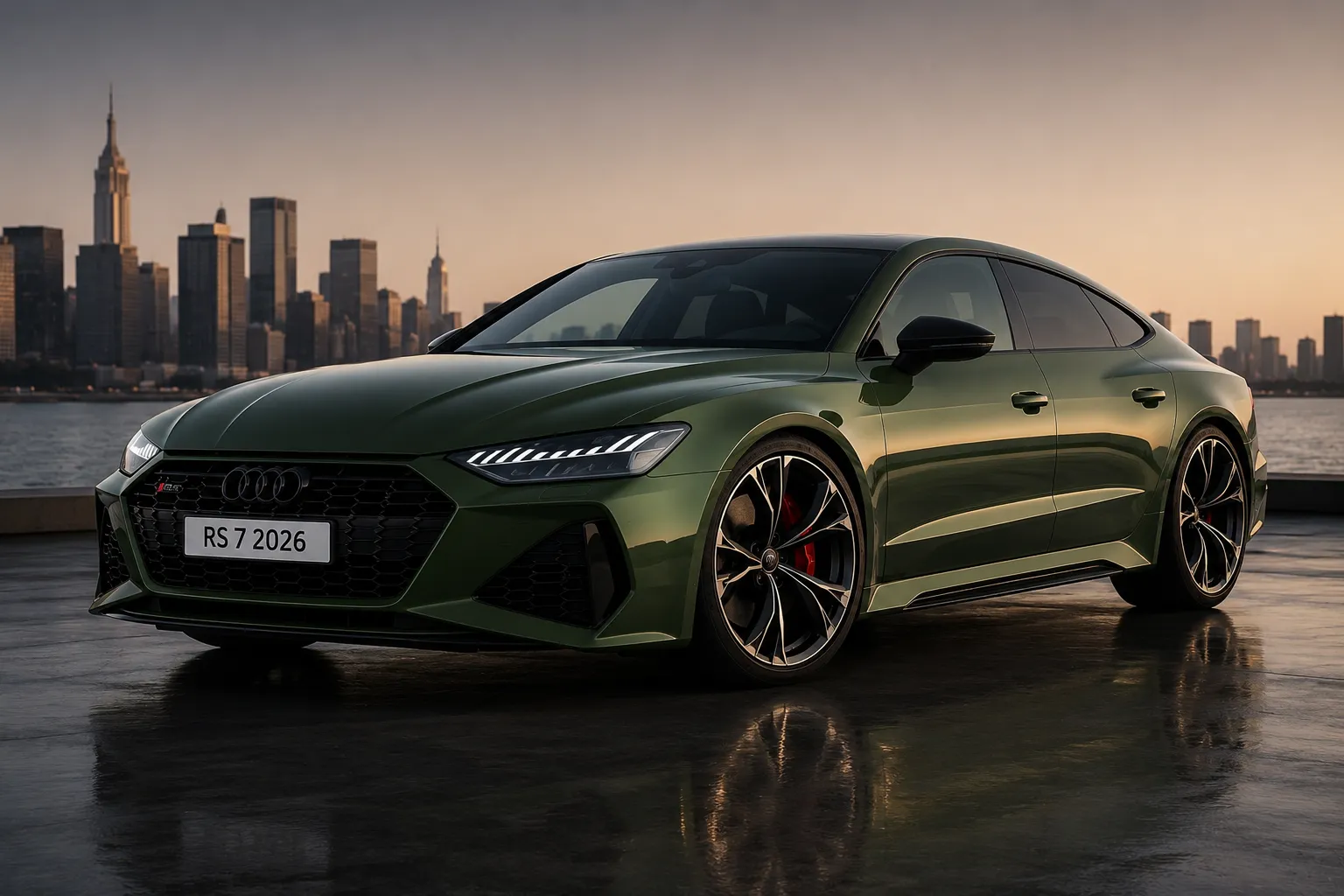
Audi renews the RS7 with the Performance version, raising the power of the V8 biturbo to 630 hp and improving dynamics without giving up daily comfort.
In short
- New Performance variant of the Audi RS7 Sportback.
- Power of the 4.0 TFSI V8 raised to 630 hp (+39 hp) and 850 Nm of torque.
- Acceleration from 0 to 100 km/h in less than 3.4 seconds and top speed of 305 km/h.
- Fastback design, Quattro traction and room for five passengers.
Previous generation
4.0 TFSI V8 of 591 hp and 800 Nm, with Quattro traction and a chassis more oriented to comfort. The Performance amplifies the sporty side without losing usability.
What changes from the previous model
- More power and torque: It rises from 591 to 630 hp and from 800 to 850 Nm, with more aggressive turbo management.
- Sport differential: The rear torque distribution is more proactive, allowing more agile behaviour in tight corners.
- Specific suspension: The Performance air suspension is 10% stiffer in dynamic mode, reducing body roll.
- Top speed: 305 km/h as standard, extendable to 320 km/h with the RS Dynamic package.
Even more powerful V8 biturbo
Audi presents the Performance version of its RS7 Sportback, an evolution that raises the power of the 4.0 TFSI V8 biturbo to 630 hp, 39 hp more than the standard RS7. Maximum torque is 850 Nm, available almost from idle thanks to the two turbos placed inside the V of the engine.
Dynamics and comfort in balance
Permanent Quattro traction remains the hallmark of the RS7 Performance. With more aggressive electronic management of the rear differential and specific air suspension, the German sports car improves its cornering behaviour without losing the smoothness that makes it usable every day.
Despite exceeding 2,000 kg, the RS7 Performance accelerates from 0 to 100 km/h in less than 3.4 seconds and reaches a top speed limited to 305 km/h, extendable to 320 km/h with the RS Dynamic package.
New technology
The 4.0 TFSI V8 with cylinder deactivation maintains its efficiency in gentle driving, despite the 630 hp. The intake and cooling system has been reinforced to withstand the power increase.
Quattro traction management is synchronised with the sport rear differential, sending more torque to the outer wheel to reduce understeer.
Progressive steering and optional carbon-ceramic brakes improve the ability to repeat intense driving.
Market context
The RS7 Performance sits between the BMW M5 PHEV and the Mercedes-AMG GT 4-door. Audi does not opt for plug-in hybridisation, but competes with a classic V8, coupé design and a more spacious interior than the GT 4-door.
Pricing and availability
The RS Dynamic package and carbon options increase the final price.
Pros / Cons
- Fastback design with room for five passengers.
- Classic V8 and Quattro traction without relying on a plug.
- Balance between daily comfort and extreme performance.
- Weight higher than lighter rivals.
- High price once carbon options are added.
- No hybrid or electric option in this generation.
Milestones
- 2010RS7 Sportback bornAudi introduces the first generation of its sports fastback.
- 2019Second generationThe RS7 is renewed with a more aggressive design and a more advanced chassis.
- 2026RS7 PerformanceAudi raises the power of the V8 to 630 hp in the new Performance variant.
Key fact
The RS7 Performance's 4.0 TFSI V8 uses cylinder deactivation, allowing it to drive as a four-cylinder on gentle journeys to save fuel.
The RS7 Performance proves that a four-door car can be as exciting as a pure sports car.
Audi Sport