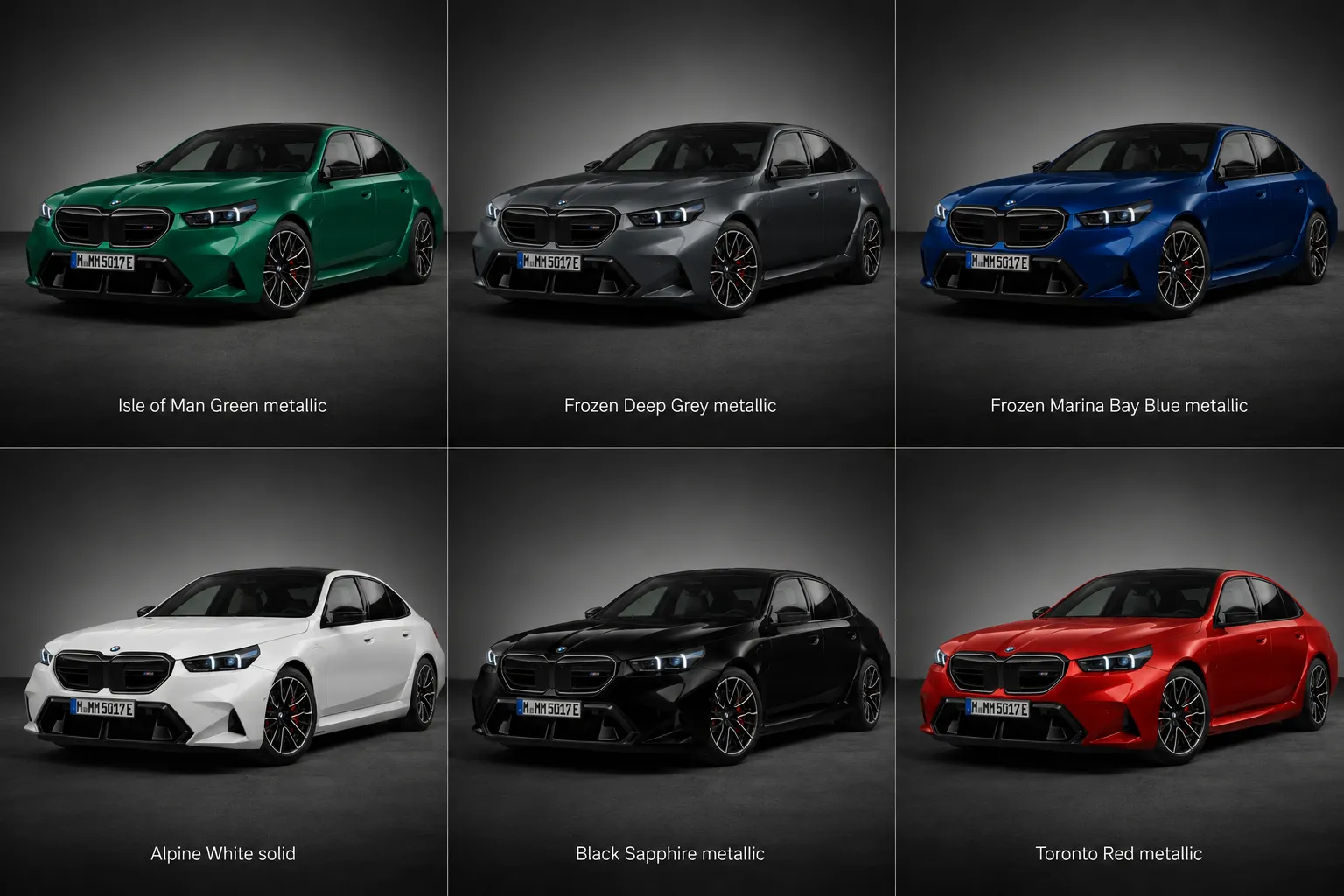
BMW introduces the M5 PHEV, a plug-in hybrid sports saloon with a 4.4-litre V8 biturbo and an electric motor that together produce 727 hp. The M5 PHEV has become the fastest production saloon on the Nürburgring Nordschleife, with a time of 7:35.060.
In short
- New generation of the BMW M5 with plug-in hybrid (PHEV) system.
- V8 4.4 biturbo + electric motor for 727 hp and 1,000 Nm of torque.
- 0-100 km/h in 3.0 seconds and 69 km of electric range.
- Direct rival of the Porsche Panamera Turbo S E-Hybrid and Mercedes-AMG GT 63 S E Performance.
Previous generation
Powered by a 4.4-litre V8 biturbo of 625-635 hp, all-wheel drive and ZF eight-speed gearbox. Powerful and balanced, but without electric assistance or zero-emission range.
What changes from the previous model
- Plug-in hybridisation: The M5 adds an electric motor and an 18.6 kWh battery, allowing electric driving and a combined output of 727 hp.
- Weight increase: The battery and electric system add around 400 kg, but the 1,000 Nm of torque and M xDrive traction compensate in acceleration.
- Comparable performance: The 0-100 km/h in 3.0 s matches or improves the previous M5 CS, despite the extra weight.
- Real daily use: The electric range makes the M5 a viable option for urban journeys without starting the V8.
A hybrid, but a real M5
The seventh generation of the BMW M5 abandons the pure combustion engine formula to adopt a plug-in hybrid system. The recipe is still dominated by the 4.4-litre V8 biturbo, but an electric motor integrated into the eight-speed automatic gearbox raises the combined output to 727 hp. The result is the most powerful M5 in history, but also the heaviest.
Supercar figures
The result is a combined power output of 727 hp and 1,000 Nm of torque, figures that surpass even many mid-engined supercars. The M xDrive all-wheel drive system distributes power with precision between the four wheels, allowing the 0 to 100 km/h sprint to be completed in just 3.0 seconds, according to Motor Trend measurements.
In addition to performance, the M5 PHEV offers an electric range of up to 69 km, enabling daily urban journeys without consuming petrol.
Who is the M5 PHEV for? It's the logical choice for buyers who prioritise maximum power, all-condition traction and the ability to drive on electric power daily without giving up the V8. However, those who care above all about lightness and the agility of a classic sports saloon - the purer driving feel of earlier, non-hybrid M5 generations - may find that the roughly 400 kg added by the hybrid system works against that priority, however well the M xDrive traction compensates for it under acceleration.
New technology
The PHEV system combines the S63 V8 with an electric unit integrated into the gearbox, allowing pure electric propulsion, electric assistance or combustion engine power as required.
The high-voltage battery is located under the floor, preserving interior space and lowering the centre of gravity compared to the previous M5.
The M xDrive power management distributes torque between the four wheels with millimetric precision, taking advantage of the instant torque of the electric motor.
Market context
The plug-in hybrid super-saloon segment is increasingly competitive. The M5 PHEV competes directly with the Porsche Panamera Turbo S E-Hybrid and the Mercedes-AMG GT 63 S E Performance. BMW bets on the traditional V8 as a differentiator against Porsche's six cylinders or AMG's strategy.
Pricing and availability
The PHEV price may vary by country and equipment.
Pros / Cons
- Supercar power with daily electric range.
- V8 biturbo preserved against rivals with smaller displacement.
- Spacious interior and real use as a family saloon.
- High weight due to the battery and hybrid system.
- Access price much higher than the previous M5.
- Slow home charging if no wallbox is available.
Milestones
- 1984Birth of the M5BMW launches the first M5 based on the E28 5 Series.
- 2018M5 CompetitionThe M5 reaches 625 hp and becomes the reference among sports saloons.
- 2025M5 PHEVThe first plug-in hybrid M5 arrives with 727 hp.
Key fact
The M5 PHEV's electric motor is not between the engine and the gearbox: it is integrated into the housing of the M Steptronic 8-speed automatic, which reduces inertia.
The M5 PHEV is not the end of the combustion engine; it is the V8 proving that it still has a future.
BMW M Engineering