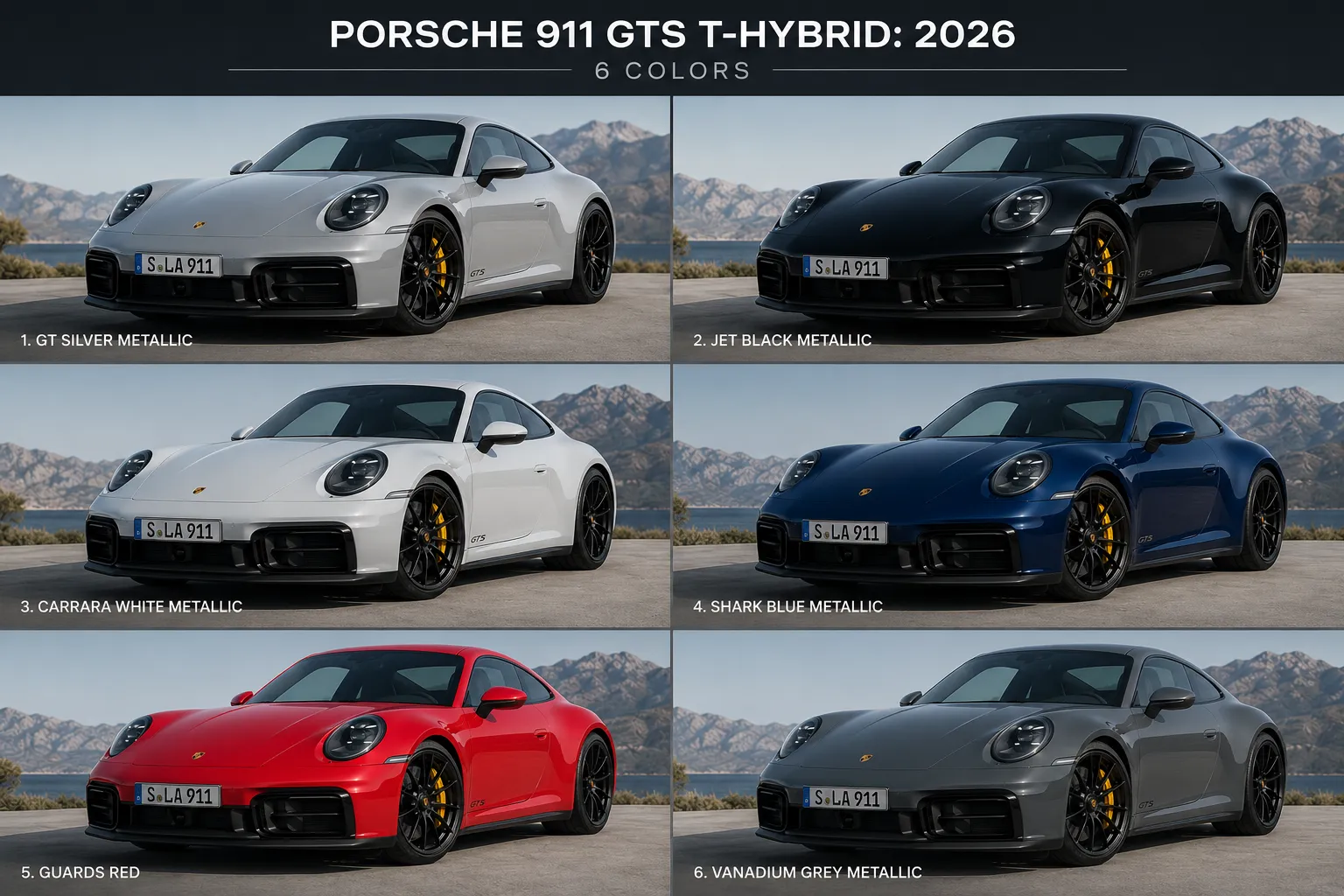
Porsche introduces the T-Hybrid system in the 911 GTS: a 3.6-litre boxer with an electric turbo and a 54 hp motor integrated into the PDK gearbox, for a combined output of 532 hp. The system runs at 400 V with a 1.1 kWh battery and accelerates from 0 to 100 km/h in approximately 2.7 seconds.
In short
- First series-production Porsche 911 with a hybrid system, although not plug-in.
- Combined output of 532 hp thanks to a 3.6-litre boxer with an electric turbo and a 54 hp motor in the PDK gearbox.
- The 1.1 kWh battery at 400 V allows energy recovery and eliminates turbo lag.
- It retains the looks and philosophy of the 911, with no need for external charging.
Previous generation
Powered by a 480 hp 3.0-litre biturbo boxer with no electric assistance. Its main difference from the new GTS T-Hybrid is the absence of an electric turbo and electric motor in the transmission.
What changes from the previous model
- New engine: The boxer grows from 3.0 to 3.6 litres, with an electric turbo that eliminates lag and improves low-rev response.
- Light hybridisation: A 54 hp electric motor integrated into the PDK gearbox adds electric torque and allows energy recovery during braking and deceleration.
- More power: The 532 hp exceed the previous GTS by 52 hp and approach the previous 911 Turbo generation.
- 400 V architecture: The 1.1 kWh battery and thermal management allow sustained track performance without depending on a plug.
Introduction
Porsche has taken a decisive step in the history of the 911 with the arrival of the T-Hybrid system. For the first time, the legendary sports car incorporates electrification without renouncing its essence: a flat-six boxer engine, unmistakable sound and rear-wheel drive (or all-wheel drive in the 4S variants).
The T-Hybrid system inside
The heart of the 911 GTS T-Hybrid is a 3.6-litre biturbo boxer that, instead of a conventional turbocharger, uses an electric turbo. This system eliminates turbo lag and provides immediate response. It is complemented by a 54 hp electric motor integrated into the eight-speed PDK gearbox, which adds 110 lb-ft of torque.
The combined output reaches 532 hp, a figure that places the GTS T-Hybrid above the Carrera S and very close to the previous Turbo generation. The system operates at 400 volts and stores energy in a 1.1 kWh lithium-ion battery.
Performance worthy of the legend
In Car and Driver tests, the 911 GTS T-Hybrid has proven to be as fast as it is refined: the 0 to 100 km/h sprint is completed in approximately 2.7 seconds, maintaining the 911 as the absolute reference among rear-mid-engine sports cars.
Who is the T-Hybrid for? For buyers who want the immediate response of the electric turbo and the extra power without giving up the naturally aspirated boxer character or relying on a plug, it's the most technologically advanced take on the 911 that still feels like a 911. Those who prefer the more traditional mechanical simplicity of the 911 - without an electric turbo or a motor integrated into the gearbox - can still find that experience in other non-hybrid versions of the range, albeit with less power and low-rev response.
New technology
The electric turbo is the most striking element: an electric motor accelerates the turbine directly, eliminating the typical response delay of large turbos.
The electric unit inside the PDK gearbox acts as launch assistance and fills torque gaps, turning the system into a mechanical extension of the engine.
Unlike a PHEV, the T-Hybrid does not add excessive weight or reduce boot capacity. The battery is small and recharges on the move, maintaining everyday usability.
Market context
Porsche demonstrates that electrification can be an ally of performance without giving up identity. The 911 GTS T-Hybrid is positioned as a more purist alternative to plug-in hybrids such as the Ferrari 296 GTB or McLaren Artura, with a less radical and more traditional 911-user-friendly formula.
Pricing and availability
Indicative price for the European market before local taxes.
Pros / Cons
- More power and response without renouncing the naturally aspirated boxer feel.
- No plug needed: it recharges on the move.
- It retains the looks, weight and philosophy of the 911.
- Greater mechanical complexity and future maintenance cost.
- Higher price than the previous GTS.
- The system's behaviour in extreme climates is still unknown.
Milestones
- 1963Birth of the 911Porsche presents the first 911 with a flat-six boxer engine.
- 2011918 Spyder hybridPorsche proves that electrification and performance can go hand in hand.
- 2025911 GTS T-HybridThe first series 911 with a hybrid system reaches the market.
Key fact
The GTS T-Hybrid electric motor is not between the engine and the gearbox, but integrated into the PDK housing, which reduces inertia and improves response.
The T-Hybrid is not a step towards the electric car; it is a step so that the 911 remains the 911 for decades.
Porsche Engineering