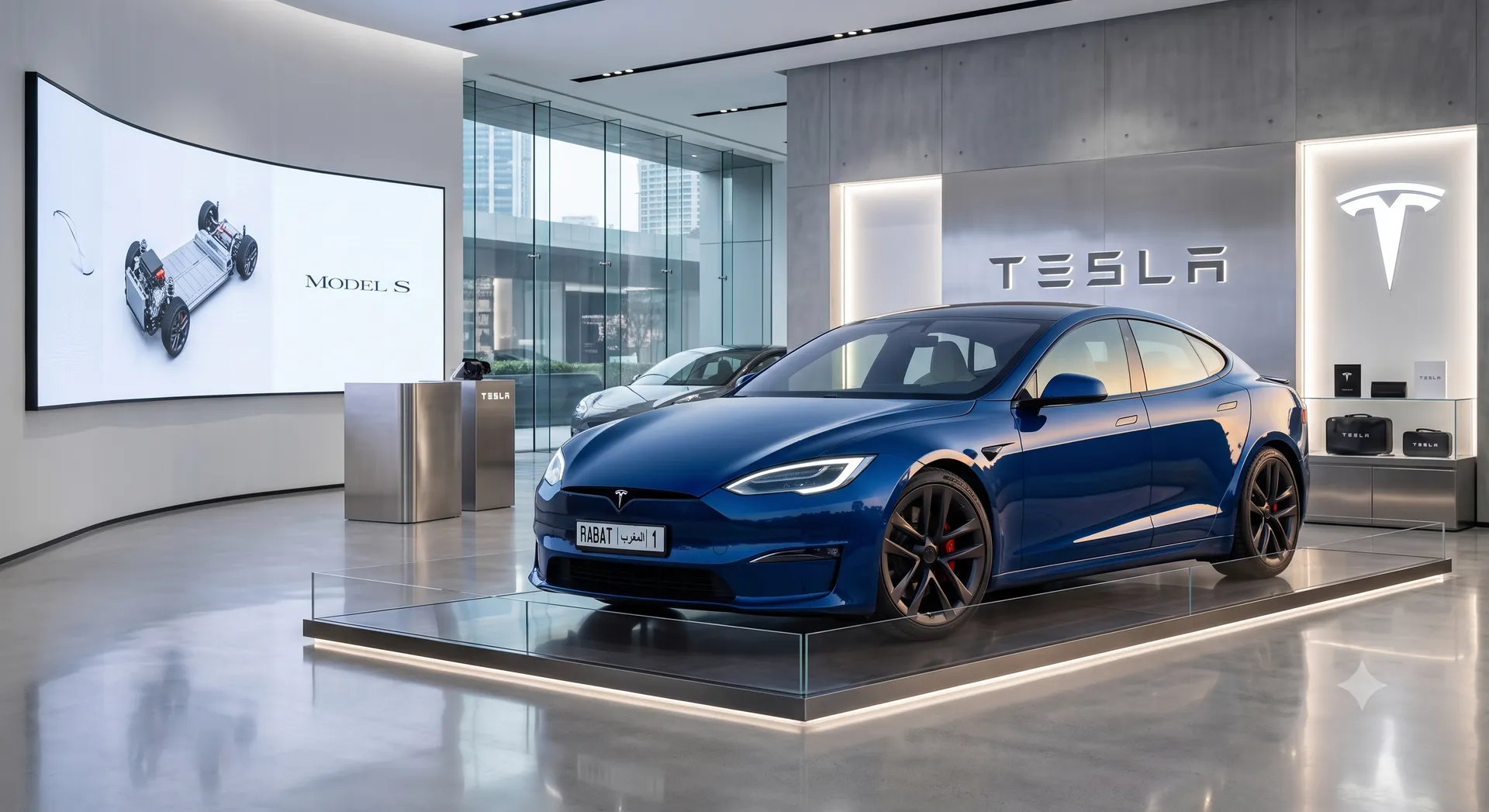
Tesla applied a subtle update to the Model S and Model X in June 2025: a new Frost Blue colour, suspension and sound-insulation tweaks, and a revised EPA range of up to 368 miles (592 km) for the Plaid on 19-inch wheels. Prices rise by $5,000 across the board.
In short
- Minor June 2025 update for Model S and Model X, with a $5,000 price rise across the range.
- The Plaid gets a redesigned front bumper and the new Frost Blue colour.
- Plaid EPA range: up to 368 miles (592 km) on 19-inch wheels; Long Range stays at 410 miles (660 km).
- New front camera, ambient lighting and active noise cancellation.
Previous generation
Three motors, 1,020 hp and an EPA range of about 348 miles. The benchmark for acceleration, but with thermal throttling under intensive use; its 400 V architecture can use V4 posts but gains no charging speed over a V3 (~250 kW).
What changes from the previous model
- New front bumper: The Plaid gets a more aggressive front end with larger air intakes; Tesla says it improves high-speed stability.
- Quieter cabin: New sound deadening and active noise cancellation, plus updated suspension bushings that improve ride quality.
- Revised EPA range: The Plaid gains 20 EPA miles on 19-inch wheels, up to 368 miles (592 km); the Long Range stays at 410 miles (660 km).
- Practical details: New front-bumper camera, dynamic ambient lighting and the new Frost Blue colour.
What actually changes
The 2025 update is light on mechanical change and heavier on detail: the Model S Plaid gets a redesigned front bumper with larger air intakes - Tesla says it improves high-speed stability - plus the new Frost Blue colour and revised wheel designs. Both models gain a front-bumper camera, dynamic ambient lighting and updated adaptive suspension bushings.
Inside, Tesla claims improved sound deadening and adds active noise cancellation. The infotainment hardware is essentially unchanged.
Range and price: the real numbers
The Model S Long Range keeps an EPA rating of up to 410 miles (660 km), while the Plaid rises to 368 miles (592 km) on 19-inch wheels, 20 miles more than before. These are EPA homologation figures, not real-world measurements.
The trade-off is price: Tesla raised every version by $5,000, so the Model S now starts at $84,990 and the Plaid at $99,990, before destination fees. Announced delivery windows were two to four weeks in the US.
New technology
Revised adaptive-suspension bushings and added insulation reduce road noise without deep mechanical changes.
Active noise cancellation uses the cabin microphones and speakers to attenuate road-frequency noise.
The front-bumper camera improves low-speed visibility and perception for the driver-assistance system.
Market context
The premium electric saloon segment has filled with rivals: Lucid Air, Porsche Taycan, Mercedes EQS and BMW i7. Tesla responds with a conservative update that improves the weak points of the Model S Plaid without altering its successful formula.
Pricing and availability
List prices, before destination and order fees. A $5,000 increase on every version versus the previous tariff.
Pros / Cons
- The Plaid remains the electric acceleration benchmark with 1,020 hp.
- Slightly better EPA range (592 km on 19-inch wheels).
- More refinement: better insulation and active noise cancellation.
- A minor update: no battery or motor changes.
- Price rises by $5,000 across the range.
- The Plaid's top speed is now capped at 149 mph in the new specification, and the yoke wheel becomes a $1,000 option available only on the Plaid.
Milestones
- 2012Model S bornTesla launches the Model S, revolutionising the electric saloon.
- 2021Plaid arrivesThe Model S Plaid reaches 1,020 hp and becomes the fastest electric saloon.
- 2026Plaid refreshTesla improves range, charging and technology without changing the formula.
Key fact
The Model S Plaid retains its three motors and 1,020 hp, but the revised thermal management allows it to maintain peak performance for longer and extend real range.
Confirmed vs. claimed
The range figures (410 mi Long Range, 368 mi Plaid) are EPA homologation data, not real-world measurements; effective range depends on temperature, speed and climate use. Tesla has not published independent test data for the insulation or suspension improvements.